
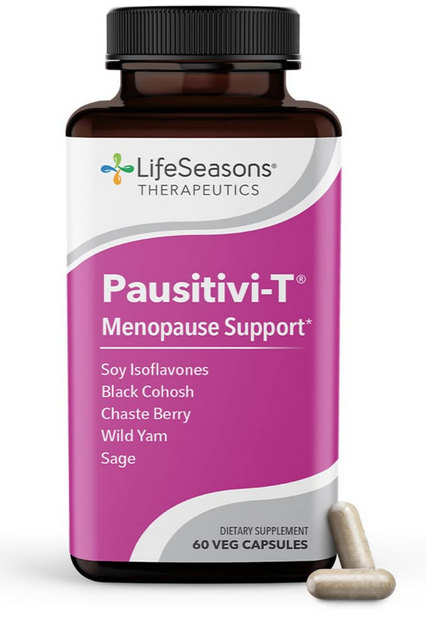
Pausitivi-T — Broad-Spectrum Herbal Menopause Support for Women Who Want One Formula That Covers Everything
Pausitivi-T takes the opposite approach to minimalist, single-ingredient menopause supplements. Instead of betting everything on one active compound, it combines 12 traditional women’s health botanicals — many of which have been used for centuries across Western herbalism, Traditional Chinese Medicine, and Ayurvedic practice — into a single daily formula. The philosophy is simple: menopause symptoms don’t come from one cause, so the solution shouldn’t rely on one ingredient.
This is the “kitchen sink done thoughtfully” approach to menopause relief. Every ingredient has a historical or clinical rationale for inclusion, and several are provided in dual forms (whole herb + standardized extract) to deliver both full-spectrum plant compounds and concentrated active constituents.
The Dual-Form Strategy: Why This Formula Uses Two Versions of Key Herbs
Most menopause supplements contain either a whole herb powder or a standardized extract — but rarely both. Pausitivi-T includes dual forms of its two most important ingredients, and there’s a sound reason behind this approach.
Whole herb powders contain the full spectrum of plant compounds — hundreds of secondary metabolites that may work synergistically in ways that isolated extracts cannot replicate. Standardized extracts, on the other hand, guarantee a specific concentration of the known active compounds that clinical trials have measured. By including both forms, Pausitivi-T aims to capture the benefits of traditional whole-plant herbalism alongside the precision of modern phytochemistry.
INGREDIENT BREAKDOWN
Soy Extract (non-GMO) — 150 mg providing 60 mg isoflavones:
Soy isoflavones are among the most studied phytoestrogens for menopausal hot flash relief. The key compounds — genistein, daidzein, and glycitein — bind weakly to estrogen receptors, providing a buffering effect that partially compensates for declining endogenous estrogen. At 60 mg of isoflavones, this is a clinically relevant dose — multiple meta-analyses show that 40-80 mg of soy isoflavones daily can reduce hot flash frequency by approximately 20-25%.
One important nuance: soy isoflavone effectiveness varies significantly based on whether a woman’s gut bacteria can convert daidzein into equol — a more potent metabolite. Approximately 30-50% of Western women are “equol producers,” and these women tend to experience greater relief from soy-based approaches. The prebiotic and fermentable fibers in a healthy diet can support equol-producing bacteria, potentially improving response rates over time.
Turkey Rhubarb (Rheum palmatum) Root — 150 mg:
An important distinction: turkey rhubarb (Rheum palmatum) is a different species from the rhapontic rhubarb (Rheum rhaponticum) used in clinically studied ERr 731 extracts found in products like Estroven Complete or Estrovera. While both belong to the Rheum genus, they contain different active compound profiles. Turkey rhubarb is traditionally used in Chinese medicine as a digestive and liver-support herb, and contains anthraquinones, emodin, and tannins with anti-inflammatory and mild laxative properties. It may support estrogen metabolism through liver detoxification pathways, though direct clinical evidence for hot flash relief is more limited than its rhapontic cousin.
Black Cohosh (Cimicifuga racemosa) — Dual Form:
- Whole Root — 100 mg: Provides the full spectrum of black cohosh compounds including triterpene glycosides, phenolic acids, flavonoids, and volatile oils. The whole-root form delivers compounds that may not be present in standardized extracts.
- Standardized Root Extract — 50 mg (2.5% triterpene glycosides, yielding 1.25 mg): Guarantees a specific concentration of the triterpene glycosides (particularly actein and 27-deoxyactein) that clinical trials have identified as the primary active compounds for hot flash relief. These compounds modulate serotonin receptors in the hypothalamus — the brain region that controls thermoregulation — rather than acting through estrogenic pathways.
The combined 150 mg total black cohosh dose (whole root + extract) is a moderate-to-good dose. Clinical trials on black cohosh typically use 20-80 mg of standardized extract, so the 50 mg extract portion is within the therapeutic range, while the additional 100 mg whole root adds full-spectrum support.
Chaste Berry / Vitex (Vitex agnus-castus) — Dual Form:
- Whole Fruit — 100 mg: Provides the full range of Vitex compounds including iridoid glycosides, flavonoids, diterpenes, and essential oils.
- Standardized Fruit Extract — 50 mg (0.5% agnuside, 0.4% aucubin): Delivers guaranteed concentrations of agnuside (0.25 mg) and aucubin (0.2 mg) — the marker compounds associated with Vitex’s hormonal effects. Vitex works at the pituitary gland level, modulating dopamine D2 receptors to reduce excess prolactin and normalize the LH:FSH ratio. This cascade supports the body’s own progesterone production — the hormone that declines most dramatically during perimenopause and whose loss drives many of the mood, sleep, and cycle-related symptoms women experience.
The combined 150 mg total Vitex dose is reasonable, though the agnuside yield (0.25 mg) is on the lower end of what clinical studies typically use.
Dong Quai (Angelica sinensis) Root — 100 mg:
Often called the “female ginseng” in Traditional Chinese Medicine, dong quai has been used for thousands of years to support menstrual health and ease menopausal transitions. It contains ligustilide (the primary active compound), ferulic acid, and polysaccharides that support circulation, mild anti-inflammatory activity, and uterine tone. While Western clinical trial evidence is limited for dong quai as a standalone ingredient, it is traditionally used in combination formulas (exactly as it appears here) where it is believed to enhance the effectiveness of other women’s health herbs.
Ginkgo biloba Leaf Extract — 60 mg (24% flavone glycosides, 6% terpene lactones):
This is a properly standardized ginkgo extract matching the profile used in clinical research. Ginkgo’s primary benefit during menopause is cognitive support — it improves cerebral blood flow and microcirculation, directly addressing the brain fog, poor concentration, and memory lapses that many menopausal women report. The flavone glycosides provide antioxidant neuroprotection, while the terpene lactones (particularly ginkgolide B) have anti-platelet and anti-inflammatory properties. Ginkgo also has evidence for improving mood and reducing anxiety in menopausal women.
Red Clover (Trifolium pratense) Blossoms — 50 mg:
Another phytoestrogen source, complementing the soy isoflavones. Red clover contains formononetin and biochanin A — isoflavones that are structurally different from soy’s genistein and daidzein, and which are converted to equol and other metabolites through distinct gut pathways. Including both soy and red clover isoflavone sources broadens the phytoestrogenic coverage and may benefit a wider range of women regardless of their individual gut bacteria profiles.
Red Raspberry (Rubus idaeus) Leaf — 50 mg:
A traditional uterine tonic used for centuries in Western herbalism. Red raspberry leaf contains fragarine, a compound that helps tone uterine smooth muscle, along with tannins and flavonoids that support overall reproductive tissue health. It is traditionally used to ease cramping and support comfortable transitions during hormonal changes.
Sage (Salvia officinalis) Leaf — 50 mg:
Sage has clinical evidence for reducing hot flash frequency and severity — one trial showed approximately 50% reduction in hot flash frequency within 4 weeks. It works through anti-hydrotic (sweat-reducing) mechanisms and mild estrogenic modulation. Sage is particularly effective for night sweats and excessive perspiration. At 50 mg of unstandardized leaf, this dose is lower than what clinical trials typically use (100-300 mg of dried leaf or concentrated extract), so it functions as a supporting player rather than a primary hot flash intervention in this formula.
Wild Yam (Dioscorea villosa) Root — 50 mg:
Wild yam contains diosgenin, a steroidal saponin that is structurally similar to progesterone. An important clarification: while diosgenin is used as a pharmaceutical starting material to synthesize progesterone in laboratories, the human body cannot make this conversion on its own. Wild yam supplements do not raise progesterone levels directly. However, wild yam does have documented anti-spasmodic and anti-inflammatory properties that may help with cramping, digestive discomfort, and mild muscle tension associated with hormonal transitions.
WHAT TO EXPECT: THE 2-MONTH BUILD-UP
Pausitivi-T is not a fast-acting formula. The manufacturer is transparent about this — and honestly, this transparency is refreshing in a market where many products imply instant relief. Herbal compounds like black cohosh, Vitex, and phytoestrogens genuinely require time to accumulate in the body and shift hormonal patterns. Vitex in particular works through pituitary modulation that takes 2-3 full menstrual cycles to produce noticeable effects. Soy isoflavones require gut bacteria adaptation and consistent daily intake to maintain steady phytoestrogen levels. Expecting results before the 8-week mark will lead to disappointment with this type of formula.
This Product Is Best For:
- Women Who Prefer the Traditional Herbal Medicine Approach: If your philosophy leans toward whole-plant herbalism and time-tested botanicals rather than isolated clinical compounds, Pausitivi-T aligns with that worldview. Every ingredient has a documented history of traditional use for women’s health spanning decades to centuries. The dual-form approach (whole herb + standardized extract) for key ingredients bridges the traditional and modern approaches thoughtfully.
- Broad, Multi-Symptom Relief (Mild to Moderate Severity): Pausitivi-T casts the widest net of any menopause supplement in this category — it touches hot flashes (black cohosh, soy, sage), mood (ginkgo, black cohosh), hormonal balance (Vitex, dong quai), cognitive function (ginkgo), and general reproductive support (red raspberry, wild yam) all in one formula. If you have several mild-to-moderate symptoms rather than one severe dominant complaint, this “coverage” approach may serve you better than a single-target formula.
- Hot Flashes & Night Sweats (Phytoestrogen Responders): With 60 mg soy isoflavones plus additional red clover isoflavones and sage, this formula provides meaningful phytoestrogenic support. Women who are equol producers (approximately 30-50% of Western women) tend to respond particularly well to isoflavone-based formulas. If you’ve previously responded to soy foods or soy supplements, the phytoestrogen load in Pausitivi-T should work well for you.
- Perimenopause — Irregular Cycles, PMS-Like Symptoms & Mood Shifts: The dual-form Vitex/chaste berry (150 mg total) supports progesterone production and LH:FSH regulation, making this formula relevant for women still cycling but experiencing the irregular periods, increased PMS, breast tenderness, and mood volatility of early perimenopause. Dong quai adds traditional menstrual support, and wild yam may help with cramping.
- Women Who Want to Avoid Single High-Dose Ingredients: Some women prefer not to take large amounts of any one compound. Pausitivi-T distributes its activity across 12 ingredients at moderate individual doses, which may feel more comfortable for those who are cautious about concentrated extracts or who have experienced sensitivity to single high-dose herbs in the past.
- Budget-Conscious Women Replacing Multiple Single-Herb Bottles: As LifeSeasons’ own marketing points out — getting all 12 of these ingredients separately would mean purchasing and managing multiple bottles at a significantly higher total cost. Pausitivi-T consolidates a full herbal menopause protocol into two capsules daily, offering convenience and cost savings for women who want comprehensive coverage.
Important Considerations:
- Contains soy — not suitable for women with soy allergies or those advised to avoid phytoestrogens due to hormone-sensitive conditions. Always consult your healthcare provider.
- Turkey rhubarb (Rheum palmatum) is a different species from the clinically studied rhapontic rhubarb (ERr 731) — do not assume equivalent clinical evidence.
- Individual ingredient doses are moderate due to the 12-ingredient formula spread. Women with one severe symptom (e.g., intense hot flashes) may benefit more from a targeted, higher-dose formula alongside or instead of this product.
- Allow a full 8 weeks of consistent daily use before evaluating effectiveness.
These statements have not been evaluated by the Food and Drug Administration. This product is not intended to diagnose, treat, cure, or prevent any disease.
Reviews
There are no reviews yet.